

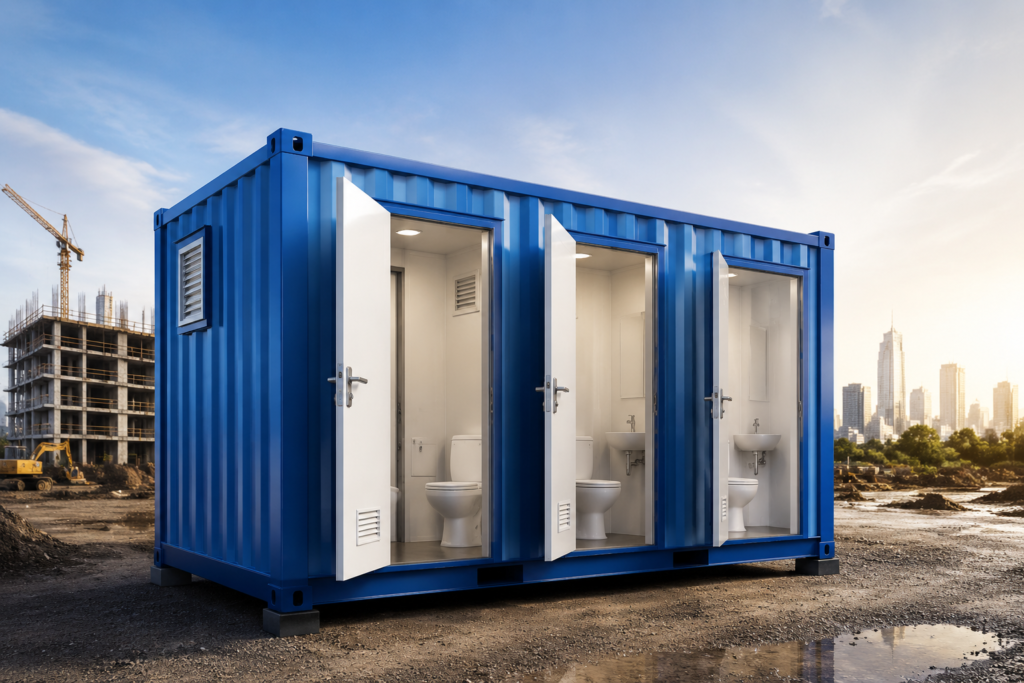
Picture this: you’ve just landed a big construction contract, or you’re organizing a three-day music festival, or maybe your company is setting up a remote mining camp in the middle of nowhere. Everything is planned down to the last detail — except one thing nobody wants to think about until it’s too late. Sanitation.
If you’ve ever stood on a dusty site wondering where 200 workers are supposed to go to the bathroom, you already know why this decision matters more than it seems. A poor toilet setup doesn’t just cause discomfort — it leads to hygiene complaints, compliance issues, unhappy workers, and sometimes even project delays.
This is exactly where a Container Toilet comes in. It’s fast, durable, hygienic, and — unlike traditional bathroom construction — doesn’t require weeks of civil work. In this guide, we’ll walk you through everything you need to know before buying one, so you can make a confident, informed decision for your project.
What Exactly Is a Container Toilet?
A container toilet is a prefabricated, ready-to-use restroom unit built inside a steel or FRP (fibre-reinforced plastic) container structure. Unlike a brick-and-mortar toilet block that takes weeks to build, a container toilet is manufactured in a factory, fitted with plumbing, fixtures, and ventilation, and then transported directly to your site — ready to install in a matter of hours.
Think of it like a plug-and-play washroom. You place it, connect the water and drainage lines, and it’s operational. That’s why they’ve become the go-to choice for construction sites, industrial units, schools, highway rest stops, disaster relief camps, and large public events across India.
Why Container Toilets Are Gaining Popularity in India
India’s infrastructure boom — highways, metro projects, smart cities, and the Swachh Bharat push for better public sanitation — has created massive demand for portable, hygienic toilet solutions. Container toilets fit perfectly into this need because they’re quick to deploy, easy to relocate, and far more durable than plastic portable cabins.
Key Benefits of Choosing a Container Toilet
- Fast installation — no lengthy construction; units are ready within a day of delivery.
- Durability — steel-body units withstand harsh weather, heavy usage, and rough handling.
- Mobility — can be shifted from one site to another as your project moves.
- Hygiene — smooth, non-porous surfaces are easier to clean and disinfect than makeshift setups.
- Cost efficiency — avoids the labour and material costs of permanent construction.
- Customization — available in Indian (squat) and Western (seat) styles, with or without bathing units.
Types of Container Toilets Compared
Not every project needs the same kind of unit. Here’s a quick comparison to help you understand which type suits your situation.
Container Toilet Types: Feature Comparison
| Type | Best For | Material | Approx. Lifespan |
| Single Unit Toilet | Small sites, offices, events | Mild steel / FRP | 10–15 years |
| Multi-Cubicle Block | Construction sites, factories | Steel with sandwich panel | 10–15 years |
| Toilet-cum-Bathroom Unit | Labour camps, hostels | Steel/FRP hybrid | 10–12 years |
| Mobile Toilet Van | Events, disaster relief | Steel chassis-mounted | 8–10 years |
Note: Lifespan estimates assume regular maintenance and normal usage conditions.
Step-by-Step: How to Choose the Right Container Toilet
Buying a container toilet isn’t complicated, but skipping a step can leave you with the wrong unit for your needs. Here’s a simple process to follow.
Buying Process Overview
| Step | What to Do | Why It Matters |
| 1. Assess Usage | Estimate daily user count and duration of use | Determines number of units and cubicle type needed |
| 2. Check Site Conditions | Review terrain, water access, and drainage options | Affects installation feasibility and plumbing setup |
| 3. Choose Material | Decide between mild steel, FRP, or hybrid panels | Impacts durability, weight, and cost |
| 4. Compare Manufacturers | Check product quality, warranty, and after-sales support | Ensures long-term reliability and easy servicing |
| 5. Plan Maintenance | Set up a cleaning and waste disposal schedule | Keeps units hygienic and extends lifespan |
Tips & Best Practices
- Always ask your container toilet manufacturer for material specifications and load-bearing details before purchase.
- Choose units with proper ventilation and odour-control systems — this makes a huge difference to daily usability.
- If your project is temporary, opt for rental or leasing options instead of outright purchase to save costs.
- Factor in transportation costs when comparing manufacturers, especially for remote or hilly locations.
- Request a site visit or installation demo before finalizing a bulk order for large sites.
Common Mistakes to Avoid
Do’s and Don’ts Checklist
| Do’s | Don’ts |
| Calculate the number of units based on peak headcount | Don’t underestimate usage during peak shifts or event hours |
| Verify water tank capacity and refill logistics | Don’t install units without checking local water access |
| Ask for a written warranty and maintenance terms | Don’t buy from unverified sellers without after-sales support |
| Inspect the unit’s flooring and anti-slip surface | Don’t ignore flooring quality — it’s a common safety hazard |
Keep this checklist handy when you’re finalizing a purchase order or comparing quotes.
Quick Reference: Choosing by Project Type
| Project Type | Recommended Unit | Suggested Ratio |
| Construction Site | Multi-cubicle block | 1 unit per 20 workers |
| Public Event / Festival | Mobile toilet van | 1 unit per 75–100 attendees |
| Labour Camp | Toilet-cum-bathroom unit | 1 unit per 10 residents |
| Disaster Relief Camp | Single unit / mobile van | 1 unit per 15–20 people |
These ratios are general guidelines — always adjust based on actual site conditions and local regulatory norms.
Why Choose Superloo India as Your Container Toilet Manufacturer
At Superloo India, we understand that sanitation infrastructure isn’t just a “nice to have” — it’s a project necessity that directly affects worker productivity, public health, and compliance. As a trusted container toilet manufacturer in India, we design units that are built to handle real-world conditions: extreme weather, heavy footfall, and long-term outdoor use.
Whether you need a single portable unit for a small site or a complete multi-cubicle setup for a large workforce, our team helps you choose the right configuration, handles delivery and installation, and supports you with maintenance guidance long after the sale.
Frequently Asked Questions
1. What is the average cost of a container toilet in India?
Costs vary based on size, material, and features, typically ranging from budget single-cubicle units to higher-end multi-cubicle blocks with bathing facilities. It’s best to get a custom quote based on your exact requirement.
2. How long does installation take?
Most container toilets can be installed within a few hours to a day, since they arrive pre-fabricated and only require water and drainage connections on site.
3. Can container toilets be relocated?
Yes, that’s one of their biggest advantages. They can be lifted and transported to a new location as your project progresses, making them ideal for construction and event use.
4. Are container toilets suitable for long-term use?
Absolutely. With proper maintenance, steel-bodied units can last well over a decade, making them a practical choice for permanent or semi-permanent installations.
5. Do container toilets need a water connection?
Most units use either a direct water line or an onboard water tank, depending on site access. Your manufacturer can recommend the right setup based on your location.
6. What maintenance is required?
Regular cleaning, periodic waste tank emptying (for units without direct drainage), and occasional checks on plumbing fixtures are usually sufficient to keep units in good condition.
Conclusion
Choosing the right container toilet doesn’t have to be a guessing game. Once you understand your usage needs, site conditions, and the type of unit that fits your project, the decision becomes straightforward. The right setup saves you time, keeps your workforce or visitors comfortable, and reflects well on how seriously you take health and hygiene standards.
If you’re planning a construction site, event, or industrial project and need guidance on the right container toilet setup, the team at Superloo India is happy to help you figure out exactly what you need — no guesswork, just practical advice backed by real manufacturing experience.
Visit: https://superlooindia.com/
Call:+91-9540006112
